


Restorative Dentistry
Implant Supported Bridges in Los Angeles
Several teeth in a row, on implants rather than on your own teeth.
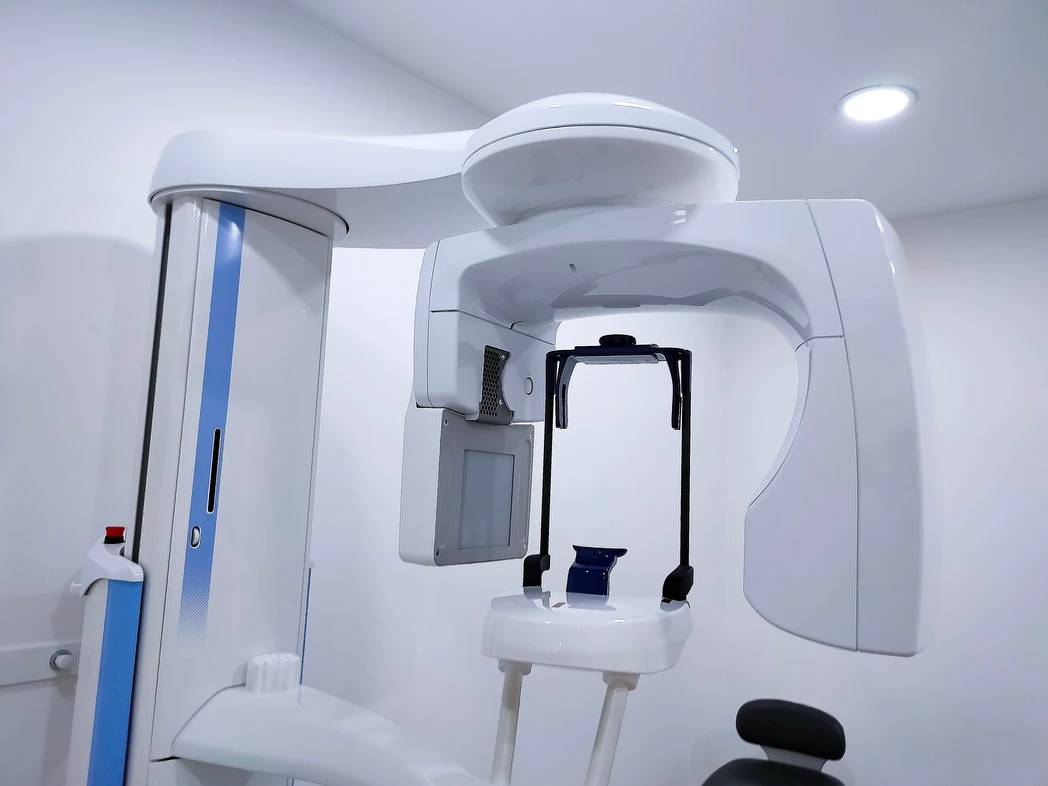
Where more than one tooth is missing together, this is often the efficient answer: fewer implants than teeth, nothing healthy crowned, and the whole span fixed in place. Smile LA Downtown Modern Dentistry plans it from a 3D scan.
How it works
How it works
Implants are placed at each end of the gap — sometimes with one in between on a longer span — and the bridge is anchored to those instead of to your natural teeth. The teeth in the middle are carried by the implants either side, which is why the number of implants can be smaller than the number of teeth being replaced. That is the efficiency of the design, and it is why a run of missing teeth does not mean a run of implants. The other half of the argument is what it leaves alone. An ordinary bridge buys its support by crowning the sound teeth at each end of the gap; this one buys it from the bone instead, and the neighboring teeth are never touched.
- Nothing healthy is crowned Unlike a traditional bridge, the neighboring teeth are untouched.
- Fewer implants than teeth Which usually makes it a shorter and less involved course than one implant per gap.
- Fixed, not removable It stays in the mouth, so eating and speaking feel like your own teeth.
- It preserves bone Implants transmit load into the jaw, which is what an ordinary bridge cannot do across a gap.
Against the alternatives
How it compares
- Against individual implant crowns Fewer implants, so a shorter course. One crown per implant is the more flexible option where teeth are missing in separate places. See implant retained crowns.
- Against an implant supported denture A bridge is fixed and a denture is removable. Where a whole arch is involved, see implant supported dentures and All-on-4.
What determines whether it is possible
Bone, mostly. Implant success varies with oral health, bone density and the position in the mouth, which is why the planning stage uses 3D cone beam imaging. Where there is not enough bone, a graft or a sinus lift may come first.

Implant Supported Bridge FAQ
- Do I need one implant per missing tooth?
- No. Implants at each end of the gap can carry the teeth in between, so fewer implants are needed than teeth replaced.
- Are my other teeth affected?
- No. That is the main advantage over a traditional bridge, which requires crowning the teeth either side.
- Is it removable?
- No, it is fixed in place. A removable option on implants is an implant supported denture.
- What if I do not have enough bone?
- A bone graft or, in the upper back jaw, a sinus lift may be needed first. The 3D scan is what establishes this.