


Oral Surgery
Bone Grafts in Downtown Los Angeles
Putting back the foundation before building on it.
Bone grafting restores structure lost to periodontitis, rebuilding the jawbone so it can support your remaining teeth and give future restorations something solid to sit on. At Smile LA Downtown Modern Dentistry it is usually the step that makes the rest of a plan possible.
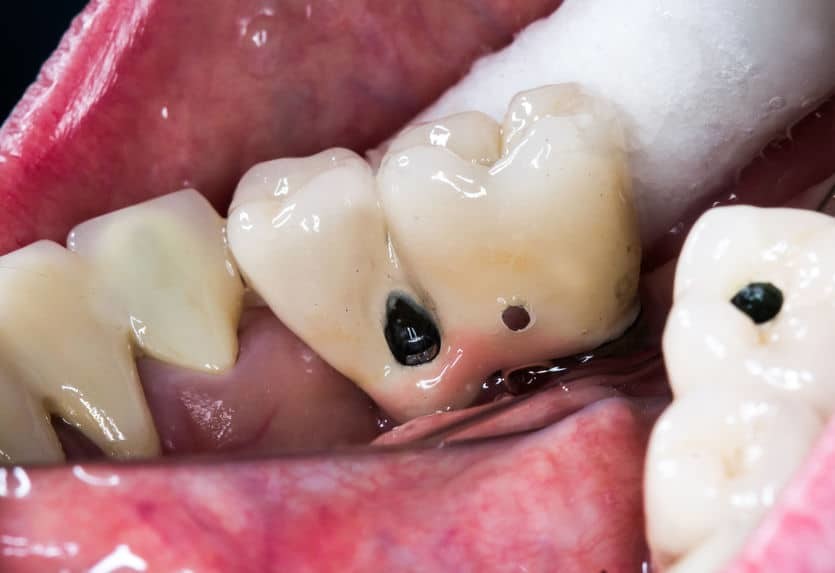
The causes
Why bone is lost in the first place
Bone is not permanent scaffolding — it responds to what is asked of it. A tooth root loads the jaw every time you bite, and that load is the signal that tells the bone to maintain itself. Take the tooth away and the signal goes with it: the socket remodels, the ridge narrows, and bone that is no longer carrying anything is gradually resorbed. Gum disease does the same damage by a different route, reaching the bone from the outside once it has passed into its advanced stage. Either way the result is the same — not enough structure left to hold whatever needs to go there next. The three causes below account for most of what we see, and more than one of them is often at work in the same mouth.
- Advanced periodontitis The third stage of gum disease affects the bone supporting your teeth, and untreated it causes tooth loss. See gum disease.
- Missing teeth Bone that is no longer loaded by a tooth root resorbs. This is also why an unstabilized denture allows bone loss.
- Extraction The socket remodels after a tooth comes out, and the ridge narrows.
What it achieves
What grafting achieves
It rebuilds the jawbone — supporting the teeth that remain, and providing a solid foundation for restorations that would otherwise not be possible. Most often that means implants: implant success varies with bone density, so where there is not enough, the graft comes first and the implant follows.
Where the graft goes
Wherever the deficiency is. In the upper back jaw the issue is often height rather than width, and there the specific procedure is a sinus lift. Where the loss is around a tooth being saved rather than replaced, guided tissue regeneration is the related technique.
What we have not put here
Healing times and graft materials vary with the site and the individual, and we would rather give you an accurate answer for your case at a consultation than a general one on a web page. Longer surgical appointments are also where IV sedation is most often used.
The short answer
A dental bone graft is a procedure that rebuilds jawbone lost to periodontitis, tooth loss or an extraction, restoring the structure that holds the teeth in place. Graft material is placed wherever the bone is deficient, and in the upper back jaw, where the shortfall is usually height, the specific procedure is a sinus lift. The rebuilt bone supports the teeth that remain and gives future restorations such as dental implants a solid foundation to sit on.
Bone Graft FAQ
- Why would I need a bone graft?
- A bone graft is needed to restore jawbone that has been lost to periodontitis, to tooth loss or after an extraction. Bone that is no longer loaded by a tooth root is gradually resorbed, and advanced gum disease reaches the bone from the outside, so either route can leave too little structure behind. The graft rebuilds that structure, either to support the teeth that remain or to give an implant a solid foundation. More than one of these causes is often at work in the same mouth.
- Do all implants need one?
- No, not every implant needs a bone graft. Implant success varies with bone density and position, so a graft is only needed where the scan shows there is not enough bone in the right place. Where there is a shortfall, the graft comes first and the implant follows once the site can hold it. Whether that applies to you depends on your scan and is discussed at the consultation.
- What is the difference between a graft and a sinus lift?
- A sinus lift is a specific type of bone graft used to gain height in the upper back jaw, while grafting in general rebuilds bone wherever it is deficient. In the upper back jaw the problem is often height rather than width, because the sinus sits above the roots of those teeth. Elsewhere in the mouth a graft is shaped to the particular loss at that site. Where bone is being rebuilt around a tooth that is being saved rather than replaced, guided tissue regeneration is the related technique.
- How long does it take to heal?
- Healing time after a bone graft depends on the site and the individual, so it is answered accurately at your consultation rather than in general terms here. The graft site, the amount of bone being rebuilt and the material used all vary from case to case. Each of those affects how long the bone needs before anything is built on it. Your own timeline is part of the plan you are given before treatment starts.