


Cosmetic Dentistry
Teeth Whitening in Los Angeles
Up to eight shades, in a little over an hour.
Zoom in-office whitening is fast, safe and comfortable, and the results are visible the same day and long-lasting. Smile LA Downtown Modern Dentistry also fits take-home kits for anyone who would rather do it gradually.
Your options
Two ways to do it
Whitening is the least invasive thing we do to the look of a smile — nothing is removed and nothing is reshaped, so the tooth underneath is left exactly as it was. What separates the two routes is pace and supervision. An in-office session happens in the chair in a little over an hour, with the strength and the timing controlled here throughout, which suits anyone working toward a date. A take-home kit is fitted for you and used on your own schedule: slower to the same place, but it asks less of your diary. In practice the two are less alternatives than a sequence — the usual pattern is to reach the shade you want in the chair and then hold it with a kit, because topping up periodically is what stops the color drifting back.
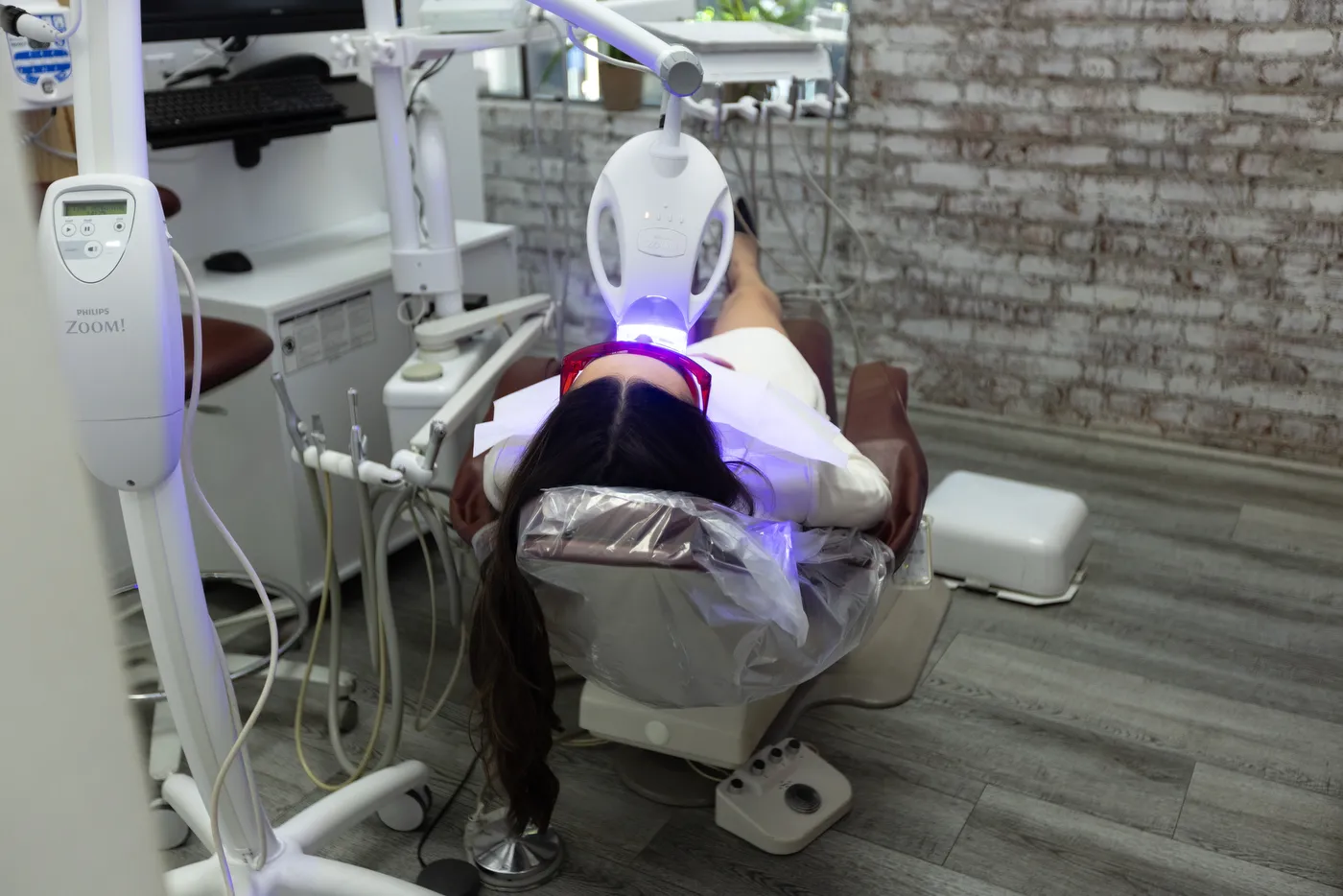
- In-office, with Zoom A light-activated gel lifts deep stains in a single session of about an hour, with most patients seeing six to eight shades. In-office teeth whitening.
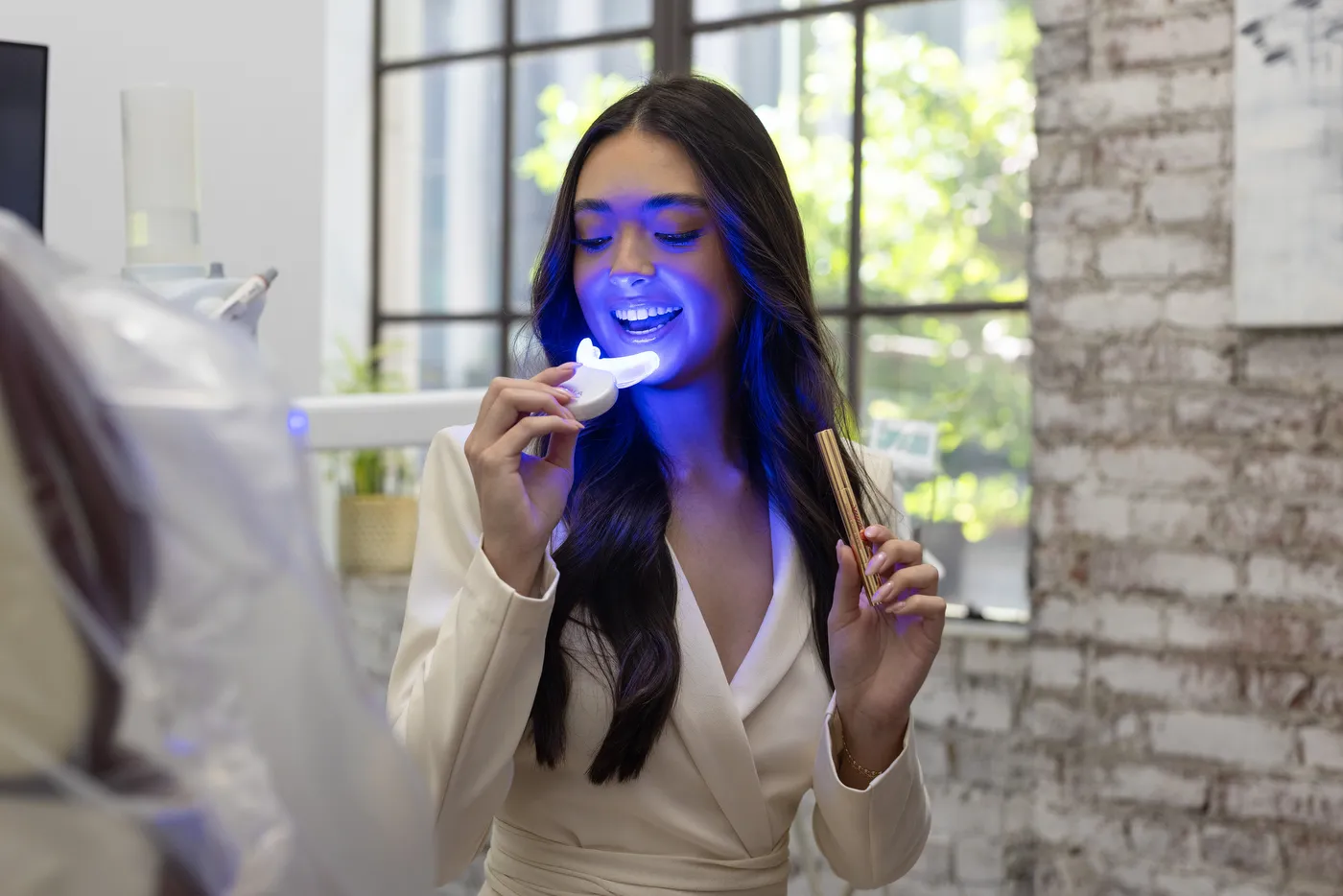
- At home, with a professional kit Slower to the result and needing more frequent touch-ups, but on your own schedule — and the usual way to maintain an in-office result. Take-home whitening.
Causes
Why teeth discolor
Discoloration builds up gradually, and there is usually more than one cause behind it.
- Diet and habits Coffee, tea, wine and smoking cause yellow or brown staining.
- Normal wear The outer layer of the tooth wears down over time, which dulls the appearance.
- Medications Some, such as tetracycline, stain teeth.
- Fluorosis Excessive fluoridation during tooth development causes discoloration.
Making it last
- Go easy on the staining ones Limit coffee, tea, wine and other staining substances.
- Stop smoking It reverses whitening quickly.
- Keep your checkups Regular visits keep the smile bright as well as healthy.
- Use a whitening toothpaste As part of your daily routine.
Seeing the difference
Whitening cases from this practice are published with the rest of our before-and-after work — see before and after.
What happens in a Zoom session
A team member carefully applies a special Zoom whitening gel to your teeth, and the gel is then activated with a low-heat Zoom light. That allows the whitening agent to penetrate the enamel and dentin, lifting deep stains and discoloration. Compared to over-the-counter options, in-office whitening is more effective at lifting deep stains and produces longer-lasting, more consistent results. Because it is carried out under the supervision of a licensed dentist, the treatment is carefully monitored for both safety and effectiveness.
What whitening can and cannot change
- Stains it works on Zoom is most effective on stains caused by food, drinks and aging.
- Stains it may not lift It may be less effective on certain types of discoloration, such as those caused by medication.
- Crowns and veneers Zoom whitening only works on natural teeth, so your dentist will discuss how to get the right result if you have crowns or veneers.
- Who it suits Zoom whitening is safe for most people, but it is important to have a dental evaluation to make sure it is appropriate for you.
After treatment
Some patients experience temporary sensitivity, which typically subsides within a few days. Using a desensitizing toothpaste and avoiding very hot or cold foods and drinks for a few days helps, and the sensitivity typically resolves on its own. Avoid dark-colored foods and drinks for the first 24 hours after treatment to prevent staining.
Results can last several months to a year or more, depending on your oral hygiene and lifestyle habits. Most patients do not need to repeat Zoom whitening for at least 6 to 12 months, and your dentist can advise based on your specific needs and provide an at-home kit to maintain your results between treatments.
The short answer
Teeth whitening is a cosmetic treatment that lightens the color of natural teeth by lifting stains from the enamel and dentin, without removing or reshaping any tooth. In-office Zoom whitening applies a gel activated by a low-heat light in a session of about 45 minutes to an hour, while a professional take-home kit works more gradually on your own schedule. Most patients see six to eight shades of improvement from an in-office session, and a take-home kit is the usual way to hold the result.
Teeth Whitening FAQ
- What is Zoom teeth whitening?
- Zoom teeth whitening is a professional, in-office treatment that uses a light-activated gel to whiten teeth by several shades in a single visit. The gel lifts deep stains from the enamel and dentin while the light activates it. The strength and timing are controlled in the chair throughout the session. Nothing is removed or reshaped, so the tooth underneath is left as it was.
- How long does it take?
- A Zoom whitening session typically takes about 45 minutes to an hour. The whole treatment happens in a single visit in the chair. That makes in-office whitening a good fit for anyone working toward a date. A take-home kit is the slower route to a similar result on your own schedule.
- How much whiter will my teeth be?
- Most patients see six to eight shades of improvement from Zoom whitening. How much change you see depends on how stained the teeth were to begin with. The cause of the staining matters too, since some types respond better than others. Your likely result is easier to judge once your teeth have been examined.
- How long do the results last?
- Whitening results last several months to a year or more, depending on your oral hygiene and lifestyle habits. Coffee, tea, wine and smoking all bring staining back, and smoking reverses whitening quickly. Regular checkups and a whitening toothpaste help keep the color from drifting. Topping up periodically with a take-home kit is the usual way to hold the result.
- Will it make my teeth sensitive?
- Some patients experience temporary sensitivity after whitening, which typically subsides within a few days. A desensitizing toothpaste helps it settle. Avoiding very hot or cold food and drink in the meantime also helps. If you already have sensitive teeth, mention it before treatment.
- Can I eat and drink straight afterwards?
- You can eat and drink after whitening, but avoid dark-colored foods and drinks for the first 24 hours. Coffee, tea, red wine and similar foods can undo some of the work during that time. Lighter-colored foods and water are the safer choice for that first day. After that, limiting staining substances helps the result last.
- Does it work on every kind of stain?
- No, Zoom whitening works better on some stains than others. It is most effective on stains from food, drink and aging. It can be less effective on some discoloration, such as staining caused by medications like tetracycline. Discoloration from fluorosis during tooth development is another cause worth discussing at the consultation.
- What if I have crowns or veneers?
- Whitening only works on natural teeth, so crowns and veneers will not change color. Where you have them, the plan needs to account for how to get an even result across the whole smile. The shade of the existing restorations is compared with what your natural teeth can reach. That is talked through before any whitening starts.
- How often can I have it done?
- Most patients do not need to repeat in-office whitening for at least 6 to 12 months. How soon the color drifts depends on diet, smoking and oral hygiene. Many people hold the result between sessions with a take-home kit. Your own timing can be reviewed at your regular checkups.
- Can I combine it with at-home whitening?
- Yes, in-office whitening can be combined with an at-home kit, and that is the usual pattern. The shade you want is reached in the chair, then a take-home kit is used to maintain it between in-office treatments. Professional take-home kits are fitted for you and used on your own schedule. Topping up periodically is what stops the color drifting back.