

Restorative Dentistry
Dental Crowns in Los Angeles
A cap that puts a damaged tooth back to work.
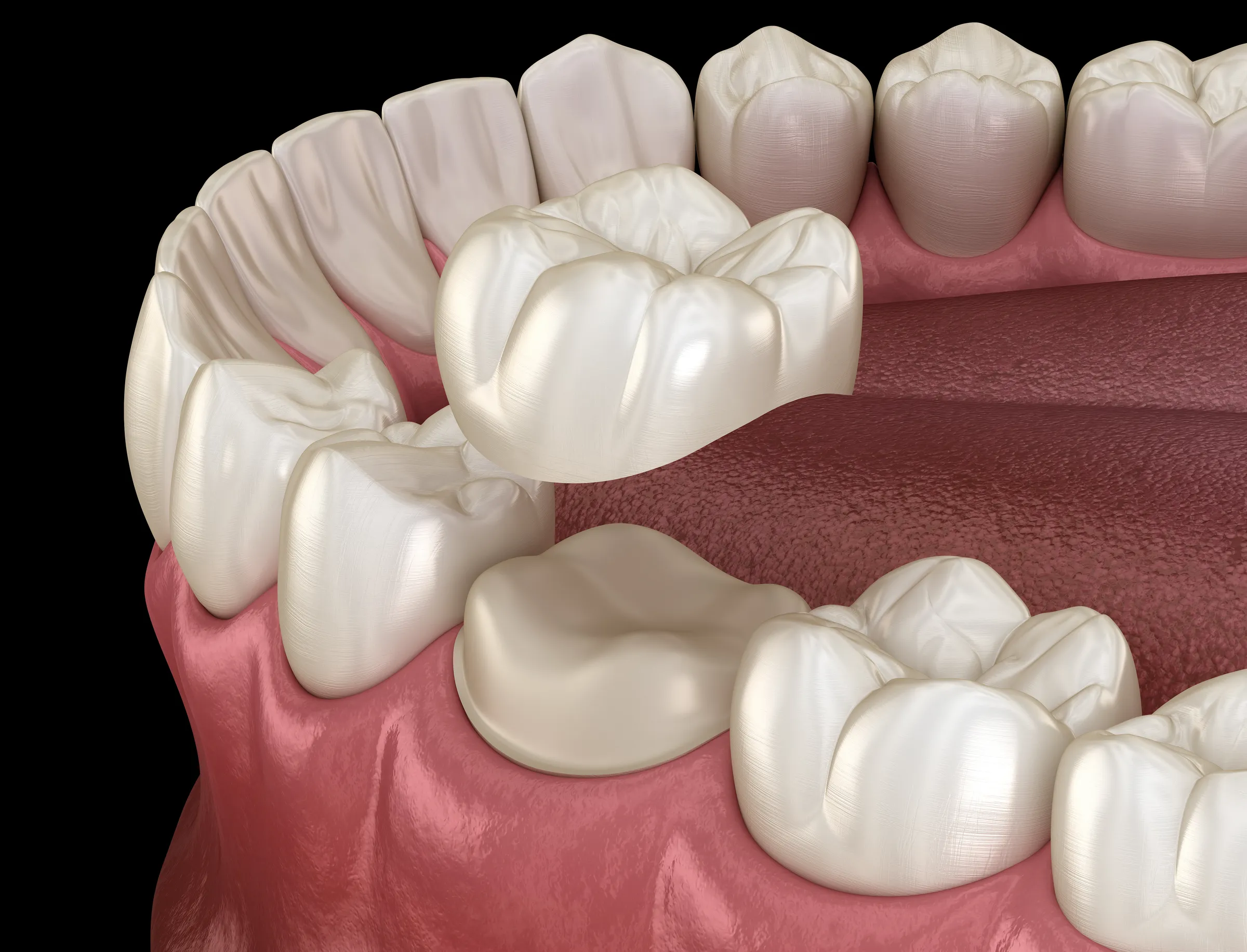
Crowns are custom-fitted caps that cover and protect a damaged or weakened tooth. Made from porcelain or zirconia, they restore strength, bring back function, and are crafted to blend into the teeth either side of them. Smile LA Downtown Modern Dentistry makes them here in the Financial District.
When you need one
When a crown is the answer
A crown is a cap that covers what is left of a damaged tooth and takes over its job. It is what we use when there is not enough sound structure for a filling to hold, or when what remains is worth keeping but too weak to trust with a full bite. That covers a wide range: a tooth mostly rebuilt in filling material, one that has been through root canal treatment, one cracked or worn down over years, and the visible tooth that finishes a dental implant. The common thread is that the tooth is worth saving and cannot be left as it is. Made from porcelain or zirconia and matched to the teeth on either side, a crown restores the shape and the bite as much as the appearance.
- A large filling with little tooth left Where minimal natural structure remains to hold anything else.
- After root canal therapy Supporting and strengthening the treated tooth. See root canals.
- Completing a dental implant The visible tooth on top of the implant post. See dental implants.
- A tooth weakened by decay or injury Protecting what is left before it fails.
- A broken or severely worn tooth Restoring the shape and the bite.
- A discolored or misshapen tooth Improving how it looks as well as how it works.
What it restores
What a crown gives you back
What a crown is for is easy to state and easy to undersell. These are the four things it actually gives back.
- Protection and strength The damaged tooth is covered and held together.
- Chewing and speaking Function restored, not just appearance.
- A natural look Matched to the surrounding teeth so it does not announce itself.
- Longevity Long-lasting results with proper care.
The process, in four steps
- Consultation We evaluate the tooth and discuss how a crown would restore its strength and appearance.
- Preparation The damaged tooth is reshaped so the crown will seat securely.
- Digital impressions Captured with a scanner rather than a tray, for a precise custom fit.
- Placement The finished crown is bonded to the tooth and checked for fit and appearance.
Looking after it
Brush and floss daily to prevent decay and gum disease around the crown. Avoid biting hard objects — ice, pens. If you grind your teeth, a nightguard is worth having. And keep up your regular checkups and cleanings.
The short answer
A dental crown is a custom-fitted cap, usually porcelain or zirconia, that covers and protects a damaged or weakened tooth and takes over its job. It is used when too little sound tooth remains for a filling to hold, and the process is a consultation, reshaping the tooth, digital impressions with a scanner, and bonding the finished crown. A crown restores the tooth’s strength, chewing function and shape, and is matched to the appearance of the teeth on either side.
Dental Crowns FAQ
- What is a dental crown made of?
- Dental crowns are made from advanced materials such as porcelain or zirconia. The material is chosen so the crown restores strength and function while blending with your natural teeth. Each crown is matched to the teeth on either side of it in color and shape. Which material suits a particular tooth depends on the tooth and is discussed at the consultation.
- Why would I need one rather than a filling?
- A crown is needed when too little natural tooth remains for a filling to hold. That includes a tooth mostly rebuilt in filling material, one treated with a root canal, one weakened by decay or injury, and one that is broken or severely worn. A filling repairs part of a tooth, while a crown covers the whole tooth and holds it together. The common thread is that the tooth is worth saving but cannot be left as it is.
- How many visits does it take?
- The number of visits depends on your tooth and is discussed at the consultation, and the process follows four steps. Those steps are consultation, preparation, digital impressions and placement. The tooth is reshaped so the crown will seat securely, impressions are captured with a scanner rather than a tray, and the finished crown is bonded once it is ready. At placement it is checked for fit and appearance.
- Will it look like my other teeth?
- Yes — each crown is crafted to blend with the teeth around it in color and in shape. It is matched to the surrounding teeth so it does not announce itself. Porcelain and zirconia are used because they restore strength while blending with natural teeth. The crown is checked for appearance as well as fit when it is placed.
- How long does a crown last?
- With proper care, a crown lasts a long time. Brushing and flossing daily around it prevents decay and gum disease around the crown. Avoiding hard objects such as ice and pens protects it from damage. Regular checkups and cleanings are what extend its life, along with a nightguard if you grind your teeth.
- I grind my teeth — is that a problem for a crown?
- Grinding can put a crown at risk, so it is worth mentioning at the consultation. A custom nightguard is worth considering to protect the crown along with the rest of your teeth. Avoiding hard objects like ice and pens helps for the same reason. Regular checkups let the crown and the teeth around it be checked over time.