Cosmetic Dentistry
Enameloplasty and Tooth Contouring in Los Angeles
Sometimes the answer is taking a little away, not adding anything on.
An edge that catches, one canine sharper than its neighbor, a front tooth a fraction longer than the one beside it — the fixes people imagine for these are usually bigger than the problem. Recontouring reshapes the enamel itself, and at Smile LA Downtown Modern Dentistry it is often a single visit.
What it can do
What contouring can change
Recontouring reshapes the enamel that is already there. A fine instrument takes a small amount off the biting edge or the side of a tooth, and the surface is polished back to a shine — so the change is in the outline of the tooth rather than in anything added to it. It is quick, it usually needs no anesthetic, and it is often finished in a single visit. What makes it worth knowing about is how small the problems it solves tend to be: an edge that catches on your lip, one canine noticeably sharper than the other, a front tooth a fraction longer than its twin. The fixes people imagine for those are almost always bigger than the problem itself.
- Uneven edges Front teeth that do not quite line up along the biting edge.
- A pointed canine Rounded off so it reads as part of the set rather than the first thing you see.
- A rough or chipped edge Smoothed, where the chip is small enough not to need building back up.
- Slight crowding at the edges Where teeth overlap a little, reshaping can make the line read straighter than it is.
The limits
What it cannot change
This is worth saying plainly, because contouring is often discussed as if it were a substitute for other treatment. It removes a small amount of enamel; it does not add material, move teeth, or change color. Enamel does not grow back, so the amount that can be taken is limited by what is there.
- To add shape or close a gap That is dental bonding or veneers.
- To move teeth That is clear aligners.
- To change color That is whitening.
Contouring is frequently combined with those rather than chosen instead of them — reshaping first and bonding or whitening after is a common sequence.
How the appointment goes
The reshaping is done with a fine instrument and finished by polishing, so the tooth surface is smooth rather than merely shorter. Because it works within the enamel, it is one of the least invasive cosmetic procedures available.
Seeing it first
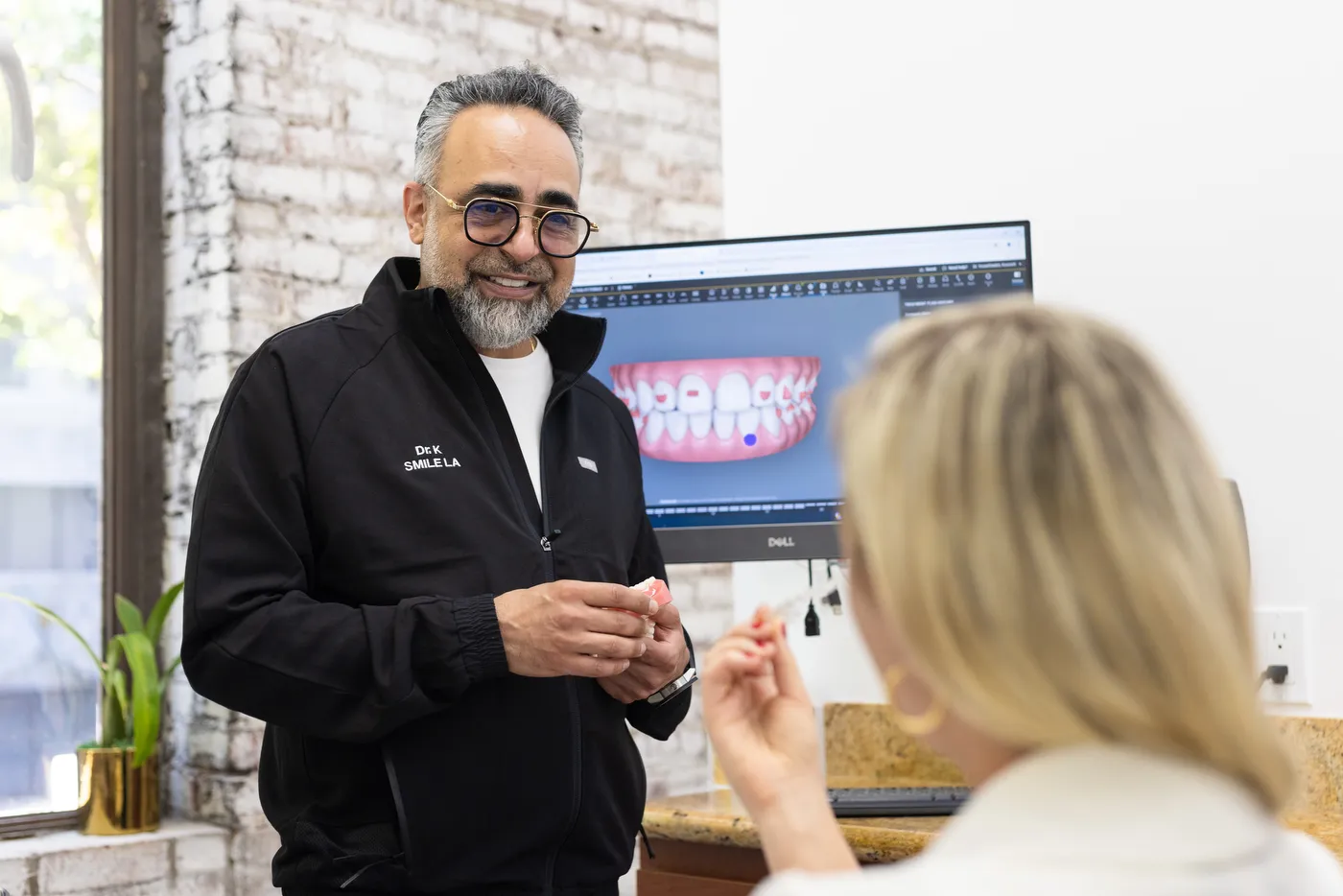
Every cosmetic plan here starts with an evaluation of your teeth, gums and bite, and we can show you a preview using digital smile design before anything is touched — which matters more than usual for a treatment that cannot be undone. See cosmetic dentistry.

The short answer
Enameloplasty, also called tooth contouring, is a cosmetic treatment that reshapes a tooth by removing a small amount of its enamel. A fine instrument takes a little off the biting edge or the side of the tooth, and the surface is then polished smooth, usually without anesthetic and often in a single visit. It suits small problems such as an uneven edge, a pointed canine or a front tooth slightly longer than its neighbor, and because enamel does not grow back, the change cannot be undone.
Tooth Contouring FAQ
- What is enameloplasty?
- Enameloplasty is the reshaping of a tooth by removing a small amount of enamel, to smooth an uneven edge, round a pointed tooth or even out length across the front teeth. A fine instrument takes a little off the biting edge or the side of the tooth, and the surface is polished back to a shine. The change is in the outline of the tooth rather than in anything added to it. It usually needs no anesthetic and is often finished in a single visit.
- Is anything added to the tooth?
- No, nothing is added to the tooth during enameloplasty. That is the difference between contouring and bonding: bonding adds tooth-colored resin, while contouring takes a little enamel away. Because it works within the existing enamel, it is one of the least invasive cosmetic procedures available. Where a tooth needs shape added or a gap closed, bonding or veneers are the tools for that instead.
- Can it be undone?
- No, contouring cannot be undone, because enamel does not grow back. That also means the amount that can be taken is limited by how much enamel is there. For this reason the result is previewed with digital smile design before anything is touched. The evaluation of your teeth, gums and bite comes first so the decision is made with the outcome in view.
- Will it fix a gap or a crooked tooth?
- Not on its own, because contouring removes enamel and cannot add material or move teeth. Gaps are closed with bonding or veneers, and the position of teeth is changed with clear aligners. Where teeth overlap a little at the edges, reshaping can make the line read straighter than it is. Contouring is often combined with those treatments, with reshaping first and bonding or whitening after being a common sequence.
- Does it change the color of my teeth?
- No, enameloplasty changes the shape of a tooth, not its color. Whitening or veneers are the treatments that change color. Contouring is often paired with whitening, with the reshaping done first and the whitening after. Which combination makes sense is worked out at the cosmetic evaluation.