

Cosmetic Dentistry
Cosmetic Bonding in Los Angeles
Small changes, one appointment, no drilling.
Bonding is the quickest route to a minor cosmetic improvement — cracks, chips, discoloration and small imperfections, or simply more symmetry across the front teeth. Smile LA Downtown Modern Dentistry uses it where it is genuinely the right tool, and says so when it is not.
What it fixes
What bonding can address
A tooth-colored resin is applied directly to the tooth surface and hardened with a curing light, which bonds it to your enamel. There is no laboratory stage, which is why it is usually finished in a single visit and why it costs less than a veneer or a crown — and it is also why it removes little or no natural enamel, since nothing has to be made to fit around a prepared tooth. That combination makes bonding the right tool for small changes: a chip, a crack, a gap narrow enough to close, a tooth that sits shorter than the one beside it. It is versatile rather than universal, and the section below is the honest account of where it stops.
- Chipped or cracked teeth Restored to their proper shape.
- Discolored teeth Improved in appearance where whitening will not reach.
- Gaps between teeth Closed, where the gap is small.
- Short or uneven teeth Made longer, or reshaped for a more even smile.
- Decayed teeth Composite resin used as a cavity filling.
- Old amalgam A cosmetic alternative to metal fillings.
- Exposed tooth roots Protected where gum recession has left them uncovered.
Honest limits
Honestly: the trade-offs
Every material has a range it works well in. Bonding’s is real but narrow, and it is worth knowing the edges of it before you choose.
- Where it wins One of the simplest and most affordable cosmetic procedures there is. Unlike veneers or crowns, which are custom-made in a lab, bonding is usually finished in a single visit. It removes minimal natural enamel, and in most cases needs no anesthesia — unless it is filling a cavity.
- Where it loses Composite resists staining, but not as well as porcelain veneers or crowns. It is also less durable, and can chip or break over time — particularly on teeth taking higher bite pressure.
- So it suits Small aesthetic adjustments, temporary cosmetic fixes, and low bite-force areas such as the front teeth. For a more durable long-term result, porcelain veneers or crowns are the better choice.
The appointment
- Preparation Little to none, which makes bonding one of the least invasive cosmetic procedures available. Anesthesia is typically unnecessary unless we are filling a decayed tooth. We select a resin shade that closely matches your natural tooth color first.
- The bonding itself The tooth surface is gently roughened and a conditioning liquid applied so the material adheres properly. The resin is applied, molded and shaped, then hardened with a UV light or dental laser, and finally trimmed, shaped and polished to match the shine and contour of the teeth around it.
- Time About 30 to 60 minutes per tooth.
A cosmetic consultation first
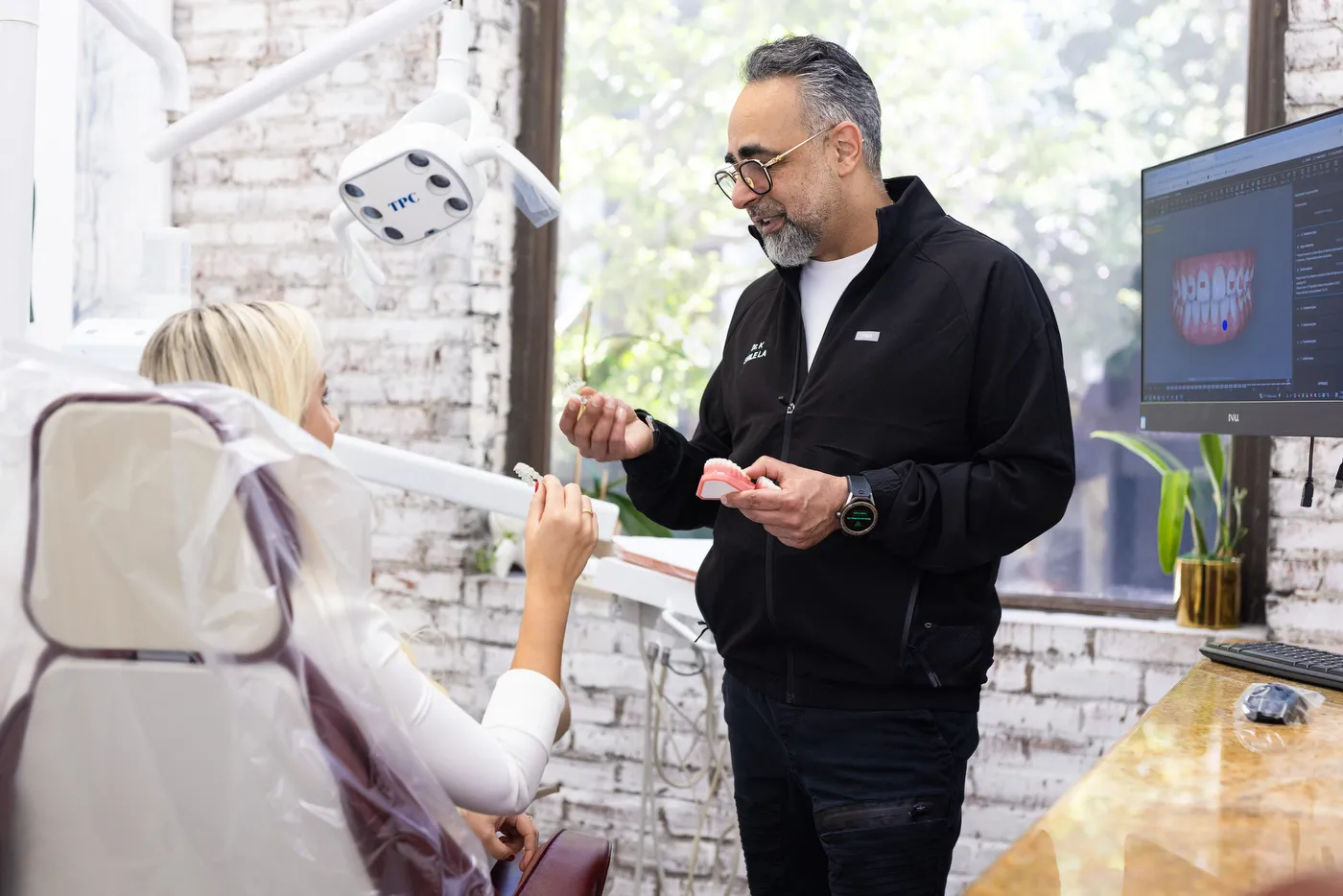
Your teeth and gums are examined comprehensively, then we talk through the options. Using dental imaging software we can show you a visual preview of how your smile would look after bonding, veneers or whitening — which is the point at which most people know what they want.
How long bonding lasts, and caring for it
With proper care, dental bonding can last anywhere from 3 to 10 years. Care for bonded teeth by brushing and flossing regularly, avoiding hard foods and not using your teeth to open objects. If the bonded material chips or breaks, it can be easily repaired by your dentist.
Things to know before you choose it
- Shade is set on the day The resin used in bonding does not respond to whitening treatments, so it is important to choose the right shade during the procedure.
- Bonding or veneers Bonding is less expensive and faster than veneers, but it does not last as long and is not as stain-resistant.
- Who it suits Bonding is a good option if you have minor cosmetic issues like chips, cracks or gaps, and your dentist can help determine if it is right for you. It can also be used to enhance the whiteness and overall symmetry of your teeth.
Cost
The cost varies depending on the extent of the bonding, and it is generally less than other cosmetic procedures like veneers. See financing and insurance.

The short answer
Cosmetic bonding is a procedure in which a tooth-colored composite resin is applied directly to a tooth and hardened with a curing light to repair chips, cracks, small gaps and discoloration. The surface is gently roughened and conditioned, the resin is shaded to match, molded into shape, cured, then trimmed and polished, usually with little or no preparation and no anesthesia. It suits small changes on low bite-force teeth such as the front teeth, typically in a single visit of about 30 to 60 minutes per tooth.
Cosmetic Bonding FAQ
- What is dental bonding?
- Dental bonding is a cosmetic procedure in which a tooth-colored resin is applied to a tooth to repair chips, cracks, gaps or discoloration, then hardened with a curing light. The resin bonds to your enamel and is shaped and polished to match the teeth around it. Because there is no laboratory stage, it is usually finished in a single visit. It is a tool for small changes rather than a replacement for veneers or crowns.
- How long does bonding last?
- With proper care, bonding lasts anywhere from three to ten years. Composite resin is less durable than porcelain, so it can chip or break over time, particularly on teeth that take higher bite pressure. It also resists staining, but not as well as porcelain veneers or crowns. Where it sits in your mouth and how you look after it both affect how long it holds up.
- Is it painful?
- Bonding is typically not painful and does not usually require anesthesia. Preparation is little to none, which makes it one of the least invasive cosmetic procedures available. The exception is when bonding is being used to fill a cavity, where anesthesia may be needed. If you have concerns about comfort, raise them before the appointment.
- How long does the appointment take?
- Bonding takes about 30 to 60 minutes per tooth. That time covers matching the resin shade, roughening and conditioning the surface, applying and shaping the resin, hardening it with a light, and trimming and polishing it. There is no laboratory stage, which is why it is usually finished in a single visit. The total time depends on how many teeth are being treated.
- Can bonding close a gap between my teeth?
- Yes, bonding is a good option for closing small gaps between teeth. Resin is added to the sides of the teeth and shaped so the space closes and the teeth look even. It works where the gap is narrow enough to close with a small amount of material. Larger gaps may call for a different approach, which is discussed at the cosmetic consultation.
- How do I look after bonded teeth?
- Look after bonded teeth by brushing and flossing regularly, avoiding hard foods, and never using your teeth to open things. Composite resin can chip or break, so the main aim is to avoid putting sudden force on it. It also stains more readily than porcelain, so the bonded surface benefits from the same daily care as the rest of your teeth. Routine visits let the bonding be checked over time.
- Should I have bonding or veneers?
- Bonding suits small adjustments and low bite-force areas like the front teeth, while porcelain veneers or crowns are the better answer for a more stain-resistant and durable long-term result. Bonding is quicker and less involved because it needs no laboratory stage and removes little or no natural enamel. Veneers and crowns are custom-made in a lab and hold up better to staining and wear. At the cosmetic consultation, imaging software can show a preview of how your smile would look with bonding, veneers or whitening.