Cosmetic Dentistry
Dental Veneers in Los Angeles
The most versatile cosmetic treatment there is — and not the right one for everybody.
A veneer is an ultra-thin ceramic shell bonded to the front of a tooth, made to match the translucency, shape and shade of real enamel. Dr. Kourosh Yousefzadeh and Dr. Razmik Galustian design them at Smile LA Downtown Modern Dentistry, and the consultation is complimentary.
What they correct
What veneers correct
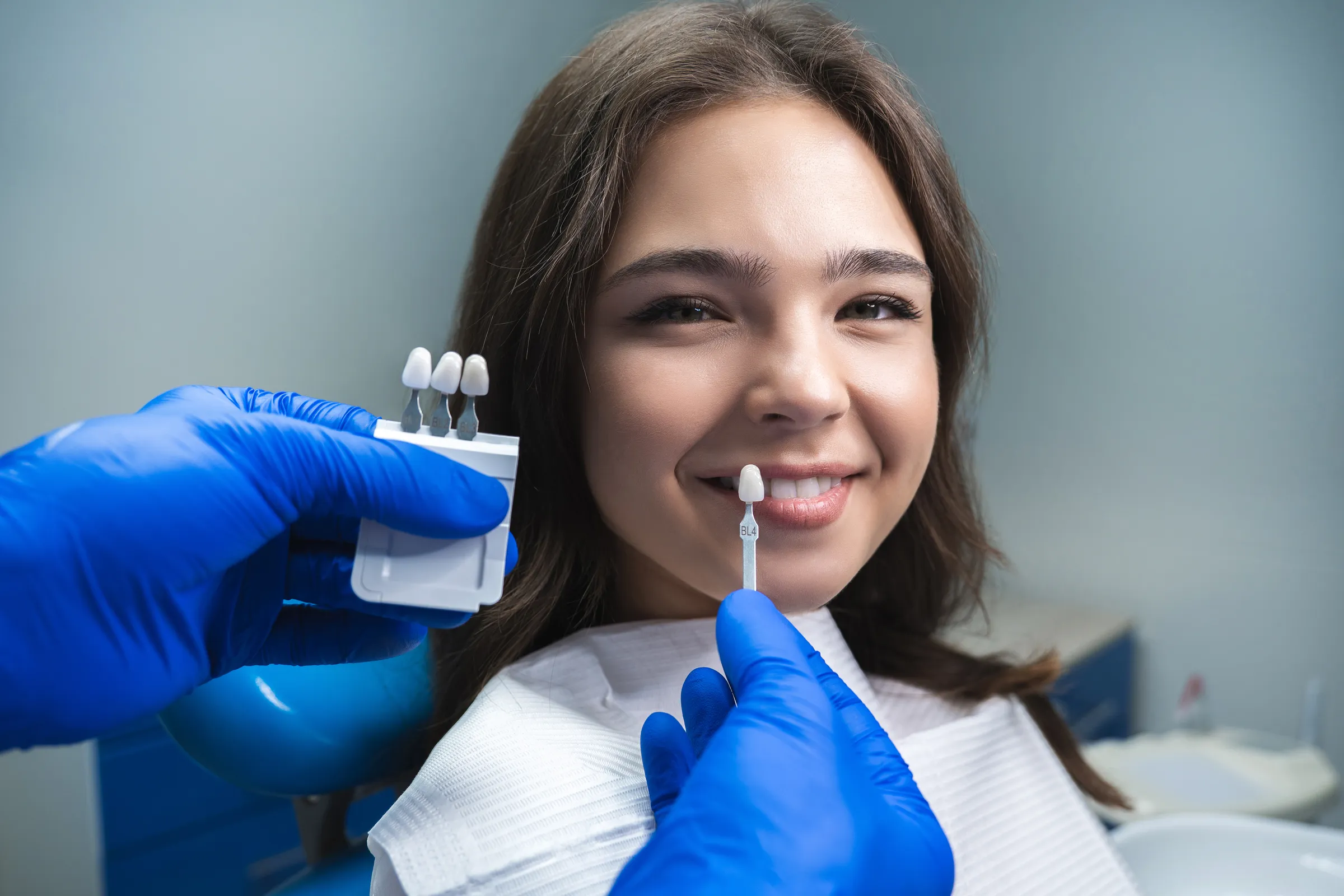
A veneer is an ultra-thin ceramic shell bonded to the front of a tooth, made to match the translucency, shape and shade of real enamel. Because it resurfaces the face of the tooth rather than repairing one particular thing about it, a single treatment can answer several complaints at once — which is what makes veneers the most versatile cosmetic option there is, and also what makes them easy to over-prescribe. They change the appearance of a tooth without moving it and without whitening it, so a gap can be closed and a stain covered in the same appointment. Some enamel is removed to seat them, and that part is not reversible, which is why the section further down matters.
- Gaps between teeth Closed without moving anything.
- Chipped or broken teeth Restored to a full, even shape.
- Stubborn stains Discoloration that whitening will not lift.
- Misshapen or crooked teeth The appearance of straight teeth, immediately rather than over months.
The material
Choosing a material
- Porcelain Beautifully natural and highly resistant to staining from coffee, wine and the rest. The default, and the reason most veneer work looks the way it does. See porcelain veneers.
- eMax A premium option known for exceptional translucency and strength. Ideal for many cosmetic cases, though not suitable for every bite condition.
Which suits is a clinical judgment rather than a preference, and it is what the consultation settles.
When a veneer is the wrong answer
Veneers are not right for everyone, and being told so is worth more than being sold a set. Significant misalignment or severe tooth damage needs restorative or orthodontic treatment first.
- For a small chip Bonding is quicker, cheaper and removes less enamel.
- For a badly damaged tooth A crown covers the whole tooth rather than its face.
- For genuinely crooked teeth Clear aligners move them instead of masking them.
- For color alone Whitening first — it is reversible and veneers are not.
Looking after them
Maintain good oral hygiene, do not bite hard objects, and never use your teeth as tools. If you grind or clench, a custom night guard protects the veneers along with everything else.

The short answer
A veneer is an ultra-thin, custom-crafted ceramic shell bonded to the front surface of a tooth, made to mimic the translucency, shape and shade of natural enamel. A thin layer of enamel is removed so the veneer sits flush, which makes the treatment irreversible, and the material, porcelain or eMax, is chosen to suit the bite. Veneers correct gaps, chips, stubborn stains and misshapen or crooked-looking teeth, changing their appearance without moving them.
Veneers FAQ
- What is a veneer?
- A veneer is an ultra-thin, custom-crafted ceramic shell bonded to the front surface of a tooth, designed to mimic the translucency, shape and shade of natural enamel. Because it resurfaces the face of the tooth, a single treatment can answer several complaints at once, such as a gap and a stain. It changes the appearance of a tooth without moving it or whitening it.
- What is the difference between porcelain and eMax?
- Porcelain is the default material, beautifully natural and highly resistant to staining, while eMax is a premium material known for exceptional translucency and strength. The eMax material suits many cosmetic cases but not every bite condition. Which one suits you is a clinical judgment rather than a preference, so the choice is made case by case at the consultation.
- Is enamel removed?
- Yes, a thin layer of enamel is removed, which is what lets the veneer sit flush. That part is not reversible, so veneers are an irreversible treatment. It is also why the result is previewed first, and why whitening is suggested first when color is the only concern.
- Should I have veneers or bonding?
- For one small chip, bonding usually wins, because it is quicker and removes less enamel. Bonding suits small adjustments and low bite-force areas, while veneers are more stain-resistant and last longer. Where several things about a tooth need changing at once, a veneer’s ability to resurface the whole face of the tooth becomes the advantage.
- Will they stain?
- Porcelain veneers are highly resistant to staining from coffee, wine and other common culprits. That resistance is one of the reasons porcelain is the default material for veneer work. Looking after them still matters: good oral hygiene, no biting hard objects, and a custom night guard if you grind or clench.
- Am I a candidate?
- Not everyone is a candidate for veneers. Significant misalignment or severe tooth damage may need restorative or orthodontic treatment first, and you will be told so. For a badly damaged tooth a crown may suit better, and for genuinely crooked teeth clear aligners move them instead of masking them.