


Soft Tissue Grafts in Los Angeles
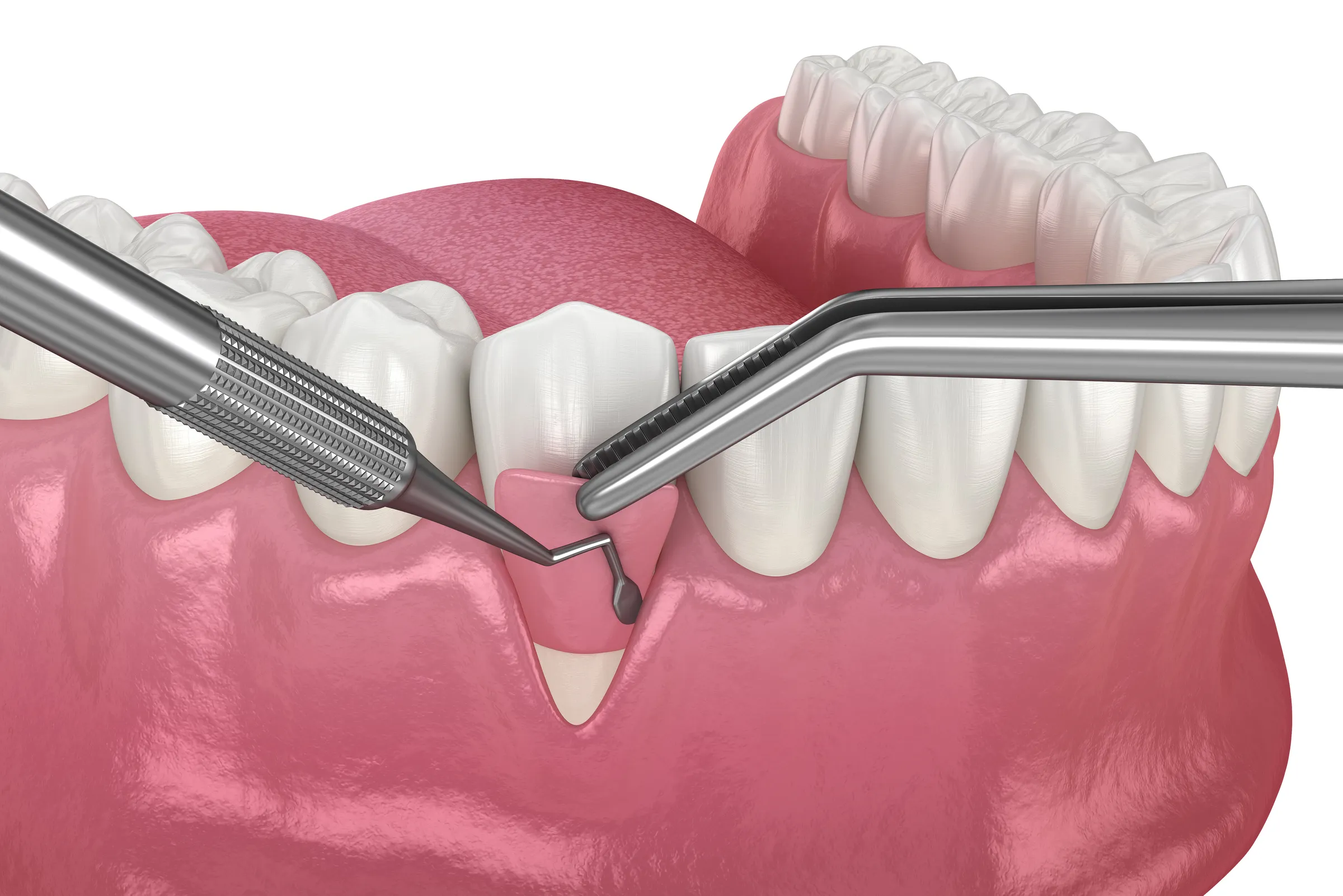
Recession exposes the root of the tooth, and unlike enamel a root has no protection. Grafting rebuilds the tissue that has gone. Smile LA Downtown Modern Dentistry treats it as a structural problem, not a cosmetic one.
Why exposed roots matter
The crown of a tooth is covered in enamel. The root is not — it is softer, it decays more readily, and it is the reason a receded area becomes sensitive to cold. So recession is not simply a change in how a tooth looks; it uncovers a part of the tooth that was never built to be in the mouth. It also tends to continue once it has started, and it can take supporting bone with it as it goes. Gum does not grow back on its own, which is the fact that decides everything else here: waiting to see whether it settles is not one of the options, because the tissue that has gone is not coming back unaided.
-
Sensitivity
Often the first thing people notice, particularly to cold.
-
Root decay
An exposed root surface is more vulnerable than enamel to decay.
-
Progression
Recession rarely stays where it is, and grafting is what stops it.
-
Appearance
Teeth that look longer than they did, unevenly across the smile.
What the graft does
Tissue is placed over the exposed area and secured so that it integrates and covers the root. The purpose is protection and stability; the cosmetic improvement is real but is the by-product rather than the aim.
Why the recession happened
Treating the graft without treating the cause is how it recurs. Gum disease is one common driver, and periodontitis is dealt with first. Grinding is another — see night guards. Brushing technique is a third, and we will go through it with you.
Related procedures
Gum contouring reshapes tissue where there is too much of it; grafting adds tissue where there is too little. Crown lengthening deliberately exposes more tooth, which is the opposite intent again.
A soft tissue graft is a gum procedure that rebuilds gum tissue where it has receded, covering the exposed root of a tooth. Tissue is placed over the exposed area and secured so that it integrates and covers the root, and the cause of the recession, such as gum disease, grinding or brushing technique, is treated as part of the plan. The graft protects a root surface that has no enamel and is more vulnerable to decay and sensitivity, and it stops the recession going further.
Soft Tissue Graft FAQ
Why does receded gum need treating?
- Receded gum needs treating because the exposed root has no enamel, so it is more vulnerable to decay and sensitivity. Sensitivity, particularly to cold, is often the first thing people notice. Recession also tends to keep going once it starts, and it can take supporting bone with it. Grafting is what stops that progression and covers the root again.
Will my gum grow back without surgery?
- No, gum tissue does not regenerate over an exposed root on its own. That is why waiting to see whether recession settles is not a real option, because the tissue that has gone is not coming back unaided. A graft rebuilds the tissue by placing new tissue over the exposed area and securing it so it integrates. Treating the cause alongside it is what stops the recession returning.
Is it a cosmetic procedure?
- No, a soft tissue graft is a structural procedure, although the appearance does improve. Its purpose is protecting the exposed root and halting the recession. Teeth that looked longer than they did can look more even afterwards, but that is a by-product rather than the aim. Gum contouring, by contrast, reshapes tissue where there is too much of it rather than adding tissue where there is too little.
What caused it?
- Gum recession is commonly caused by gum disease, grinding or brushing technique. Treating the cause is part of the plan, because grafting without it is how the recession returns. Periodontitis is dealt with first where it is present, and grinding may call for a night guard. Brushing technique is gone through with you so the new tissue is not worn back.