


Restorative Dentistry
Well-Fitting, Natural-Looking Dentures in Los Angeles
The fit is the whole job.
Placing a denture properly takes skill and experience — most of the misery people report with dentures comes from a poor one. If you have lost teeth, or are at risk of losing them, the team at Smile LA Downtown Modern Dentistry will work through the options for your mouth and your life rather than handing you the standard answer.

The four types
What makes a quality denture
Most of the misery people report with dentures traces back to the same thing: one that was poorly made or badly fitted. A base that does not match the ridge underneath it will slip, and a bite that is a fraction out produces sore spots wherever the load lands wrong — neither of which is solved by more adhesive or by getting used to it. So the fit is the job, and it is where the care goes. We work with a top-tier denture lab and offer four types, and which of them suits you comes down to how many teeth are being replaced, what is still there to work with, and whether the teeth are coming out at the same appointment.
- Full Replacing all the teeth in the upper jaw, lower jaw or both. They rest on the gums, creating a seal that holds the prosthesis secure through the day.
- Partial Replacing several missing teeth and blending with the natural teeth you still have, which avoids unnecessary extractions. The replacement teeth are matched to integrate with your existing smile.
- No-metal Where a metal framework is not wanted.
- Immediate Fitted at the time the teeth come out, so you are not without them.
Why we recommend stabilizing with implants
Dentures can be supported by dental implants, and where it is appropriate we recommend it. It is not only about the feel: an unstabilized denture allows bone loss, and bone loss makes dentures harder to wear, causes jaw problems, and eventually changes the shape of your face — the sunken look people associate with dentures. Implants placed by our team hold securely and give a natural fit and feel. See dental implants.
Conventional or implant-supported?
Conventional full and partial dentures are effective and economical, and they replace all your teeth at once. They also need daily adhesive and periodic adjustment as your jawbone and gum tissue change. Implant-supported dentures stay firmly in place instead, which means chewing with the confidence you would have with natural teeth.
How yours is made
How yours will be made
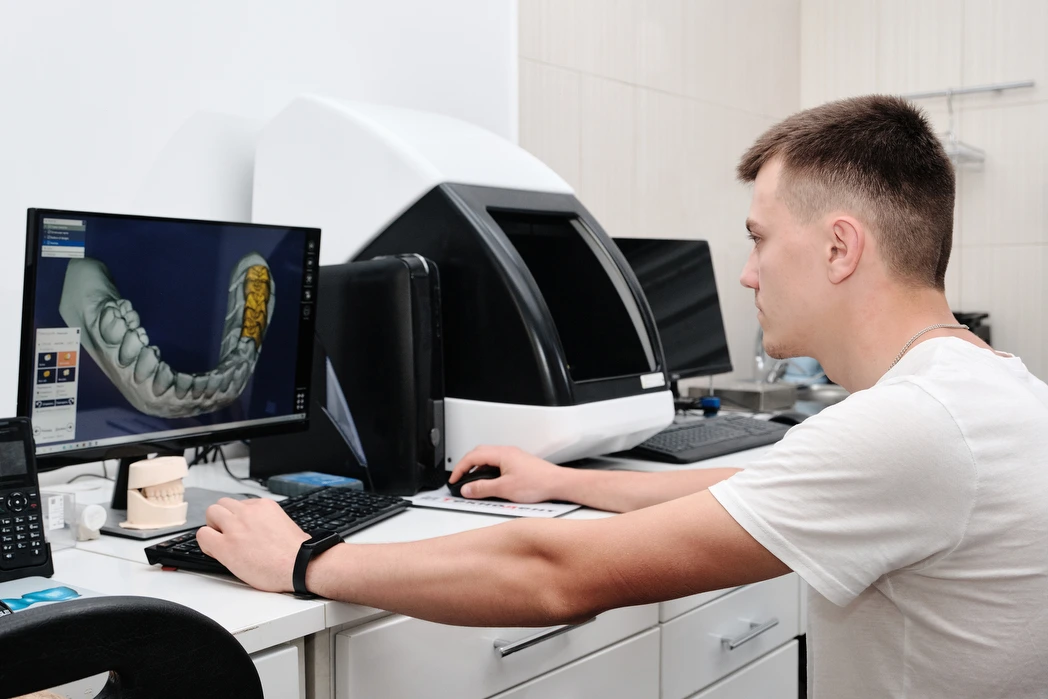
Full and partial dentures here are custom-made from high-quality materials chosen to look natural and last. We take care over the shape, color and size, and over getting the bite right so you can speak and eat comfortably. Proper alignment also holds the face up, which is what prevents premature wrinkling around the lips and the corners of the mouth.
Other ways to replace missing teeth
- Dental implants A permanent replacement anchored in the jaw. More on implants.
- Partial and full dentures Removable, and the most economical route.
- Crowns, onlays and veneers Where the tooth is broken down rather than gone. See crowns and veneers.
Why patients choose us for dentures
Your smile does a lot of work — eating, talking, first impressions. We involve you in the denture design from start to finish, and we deal with the underlying issues too, from bone loss to speech, so the result is built around your mouth and your budget rather than a catalog.
The short answer
Dentures are removable replacements for missing teeth, made either as full dentures that replace all the teeth in an arch or as partial dentures that replace several teeth and blend with the natural teeth that remain. A conventional denture rests on the gums, and the accuracy of its fit and bite decides whether it stays secure and feels comfortable. Dentures can also be stabilized with dental implants, which holds them firmly in place and helps prevent the bone loss that an unstabilized denture allows.
Dentures FAQ
- What types of denture do you make?
- There are four types: full, partial, no-metal and immediate dentures. Full dentures replace all the teeth in the upper jaw, lower jaw or both; partials replace several teeth alongside your natural ones; no-metal dentures avoid a metal framework; and immediate dentures are fitted when the teeth come out. Which one suits you depends on how many teeth are being replaced, what is still there to work with, and whether the teeth are coming out at the same appointment.
- Why do dentures slip?
- Dentures usually slip because they were poorly made or badly fitted. A base that does not match the ridge underneath it will move, and a bite that is slightly out causes sore spots wherever the load lands wrong. A well-made full denture creates a seal against the gums that holds it secure, and where that is not enough, implant stabilization holds it in place.
- What is an implant-supported denture?
- An implant-supported denture is a denture held in place by dental implants rather than by suction and adhesive. Because the implants anchor it, it stays firmly in place, so you can chew with the confidence you would have with natural teeth. Stabilizing a denture this way also helps prevent the bone loss that an unstabilized denture allows.
- Do dentures cause bone loss?
- An unstabilized denture allows bone loss in the jaw. That bone loss makes dentures harder to wear, causes jaw problems and can eventually change the shape of the face, giving the sunken look people associate with dentures. Implants prevent it, which is why implant stabilization is recommended where it is appropriate.
- Will a partial denture damage my remaining teeth?
- No, a partial denture is designed to blend with the natural teeth you still have rather than replace them. Keeping those teeth helps you avoid unnecessary extractions. The replacement teeth are matched to integrate with your existing smile.
- Do dentures need adjusting over time?
- Conventional dentures do need adjusting over time, because the jawbone and gum tissue they rest on keep changing shape. They also require daily adhesive to stay secure. Implant-supported dentures stay firmly in place instead, which is one reason implant stabilization is recommended where appropriate.