


Restorative Dentistry
Denture Relining in Los Angeles
The denture did not change. Your gums did.
Conventional dentures need periodic adjustment because of changes in the jawbone and gum tissue underneath. Relining is that adjustment — Smile LA Downtown Modern Dentistry refits the base rather than starting again.
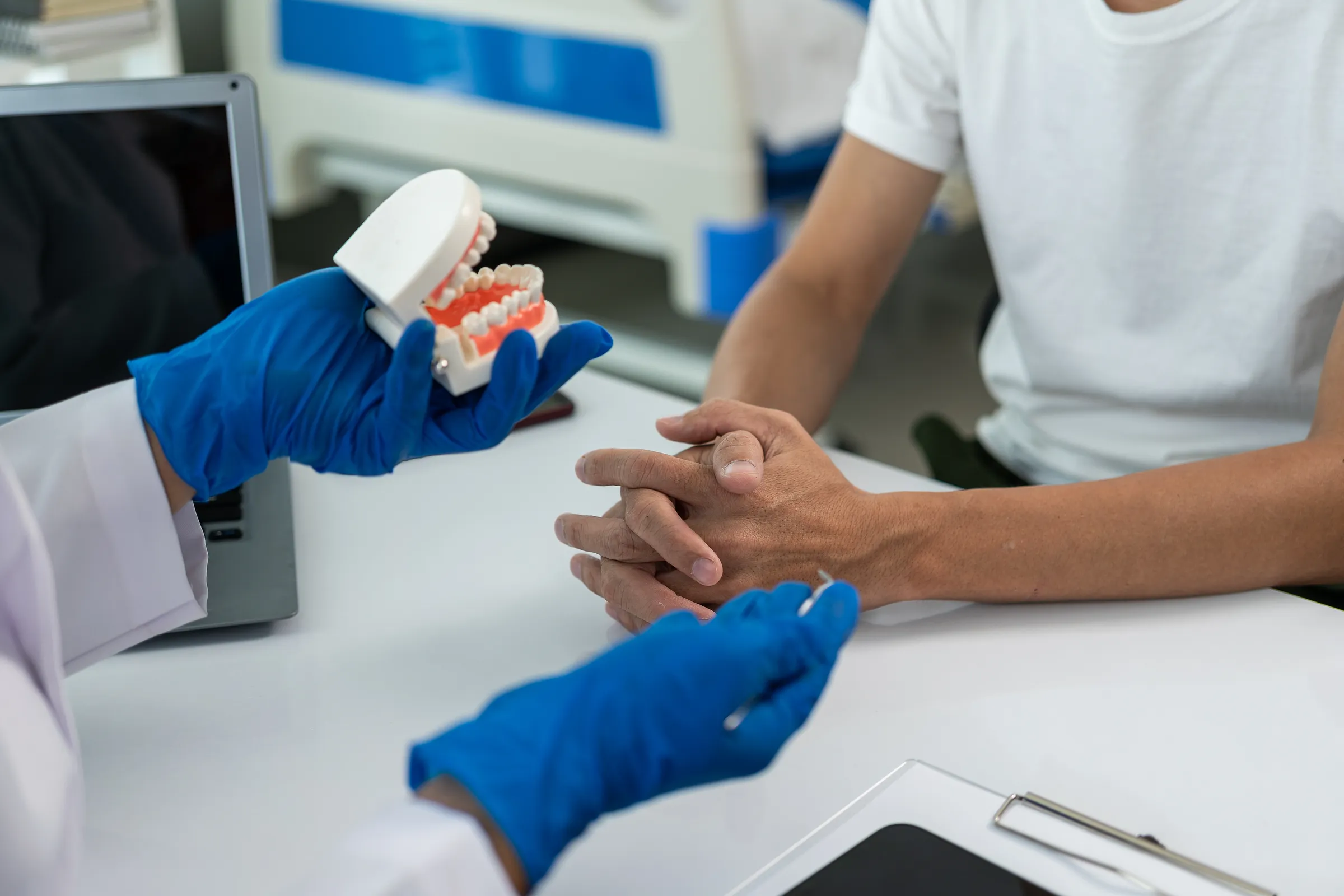

Why the fit goes
Why a denture stops fitting
The ridge of bone and gum that a denture rests on remodels over time, and it does so faster where there are no tooth roots left to load it. The denture keeps the shape it was made in while the mouth beneath it changes, and the seal that was holding it gradually stops working. More adhesive is the symptom, not the fix. This is not a fault in the denture and it is not something you have done wrong — it is the expected consequence of a prosthesis resting on living tissue that is still changing. It happens fastest in the first year after extractions and then continues slowly for as long as the denture is worn, which is why a reline is a maintenance appointment rather than a repair.
The refit
What relining does
The tissue-facing surface of the denture is resurfaced so it matches the shape of your gums now. The teeth, the color and the bite you are used to all stay.
- Signs it is due A denture that slips, needs steadily more adhesive, or has started causing sore spots.
- What is kept The denture itself — this is a refit, not a remake.
- After extractions An immediate denture is fitted to a mouth that is about to change, so a reline is part of the expected course rather than a problem.
When relining is not the answer
If the denture is worn, damaged, or the bite has gone, a new one is the honest recommendation. And if bone loss is why the fit keeps failing, stabilizing with implants addresses the cause rather than the symptom — see implant supported dentures. The overview is on dentures.
Denture Relining FAQ
- Why has my denture become loose?
- The bone and gum tissue underneath change shape over time. The denture keeps its shape, so the seal that held it stops working.
- Do I get a new denture?
- No — relining resurfaces the fitting side of the one you have. The teeth and the bite stay as they are.
- How do I know I need one?
- Slipping, needing steadily more adhesive, or new sore spots are the usual signs.
- Can relining fix any problem?
- No. A worn or damaged denture, or one whose bite has gone, needs replacing. And where bone loss keeps undoing the fit, implant stabilization treats the cause.