
Restorative Dentistry
Dental Implants in Downtown Los Angeles
A permanent replacement that behaves like the tooth it replaces.
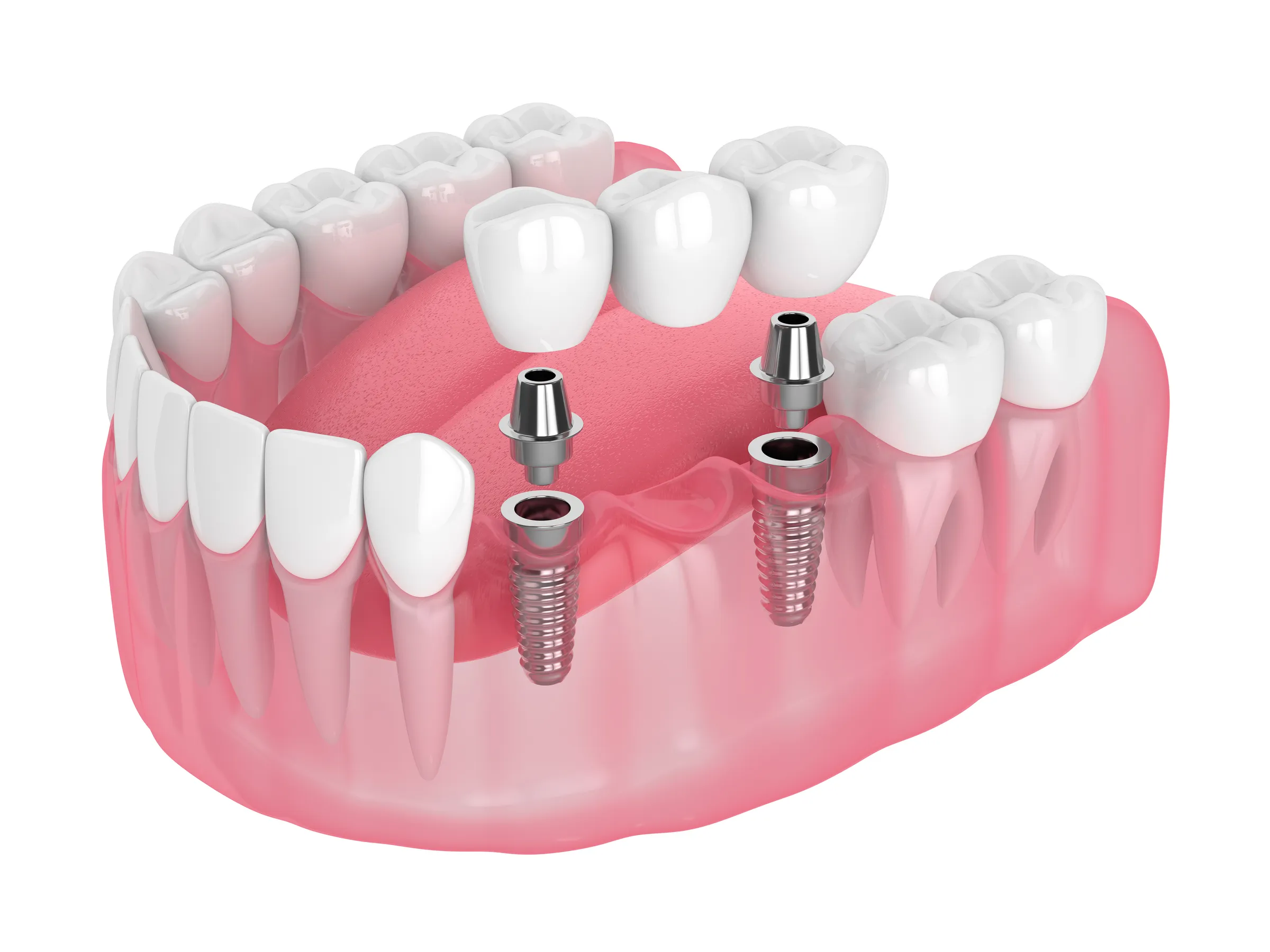
An implant is a titanium post that acts as an artificial tooth root, anchoring a replacement tooth securely enough to chew, speak and smile without thinking about it. Whether it is one missing tooth or a full-mouth restoration, the implant dentists at Smile LA Downtown Modern Dentistry place them in the Financial District.
Why an implant
Why implants over the alternatives
An implant is a titanium post placed into the jaw, where it takes over from the root of the missing tooth rather than just the visible part of it. That distinction is the whole argument for implants. A bridge or a denture sits on top of the gum and borrows its support from the teeth or the ridge around it; an implant is anchored in bone and stands on its own. Nothing has to be filed down to hold it, so the healthy teeth either side keep their enamel. Nothing rests on the gum, so nothing slips mid-sentence. And because the post loads the jaw the way a root did, the bone underneath goes on being used — which is the quiet difference that shows up years later.
- Comfort and function A secure, stable foundation for replacement teeth. Eating, speaking and smiling feel completely natural in a way removable dentures do not.
- Speech Implants stay firmly in place. Nothing slips or shifts mid-sentence.
- Oral health preserved Unlike a bridge, an implant does not require altering the healthy teeth either side of the gap, so more of your own structure survives.
- Appearance Custom-crafted to match the surrounding teeth, so the implant reads as one of them.
Reliability
How reliable are they?
Research puts the success rate for dental implants at over 95%, which makes them one of the most effective long-term answers to a missing tooth. It is not automatic: success varies with your oral health, your bone density and where in the mouth the implant goes. That is exactly why the experience of the person placing it matters, and why the planning stage here uses 3D imaging rather than guesswork.
What it costs, and how to spread it
Cost is a real part of planning implant treatment. The practice accepts most major dental insurance plans, provides flexible in-house financing, and offers payment plans intended to ease the burden. We will go through the possibilities with you before anything is scheduled — see financing and insurance for the full picture.
Related treatment
Implants also stabilize a denture and help prevent the bone loss that makes dentures hard to wear. See dentures, and full mouth reconstruction where more than a few teeth are involved.

The short answer
A dental implant is a titanium post placed in the jawbone that acts as an artificial tooth root and anchors a replacement tooth. Planning uses 3D imaging, and the replacement tooth carried by the post is custom-crafted to match the surrounding teeth in shape and color. Implants restore chewing, speech and appearance without altering the healthy teeth on either side, and they are used for anything from a single missing tooth to a full-mouth restoration.
Dental Implants FAQ
- What actually is a dental implant?
- A dental implant is a titanium post placed in the jaw that serves as an artificial tooth root. It takes over from the root of the missing tooth rather than just the visible part, and anchors a replacement tooth securely enough to restore normal chewing, speech and appearance. Because the post loads the jaw the way a root did, the bone underneath goes on being used.
- How successful are implants?
- Research puts the success rate for dental implants at over 95%. Success is not automatic: it varies with your oral health, your bone density and where in the mouth the implant goes. That is why the planning stage uses 3D imaging, and why the experience of the person placing the implant matters.
- Are implants better than a bridge?
- For preserving your other teeth, yes — an implant stands on its own, while a bridge requires altering the healthy teeth on either side of the gap. A bridge borrows its support from the neighboring teeth, which have to be filed down to hold it. An implant is anchored in bone instead, so those teeth keep their enamel and more of your own tooth structure survives.
- Can implants replace a whole arch?
- Yes — implants are used for anything from a single missing tooth up to a full-mouth restoration. They can also stabilize a denture, which helps prevent the bone loss that makes dentures increasingly hard to wear. Where more than a few teeth are involved, full mouth reconstruction covers the wider plan.
- Will the implant look obvious?
- No — the replacement tooth is custom-crafted to match your surrounding teeth in shape and color. The aim is for the implant to read as one of your own teeth. Because it is anchored in bone and does not rest on the gum, it also stays firmly in place when you eat, speak or smile.
- How do people pay for them?
- The practice accepts most major dental insurance plans and offers flexible in-house financing and payment plans. Cost is a real part of planning implant treatment, so the options are gone through with you before anything is scheduled. The financing and insurance page sets out the full picture.